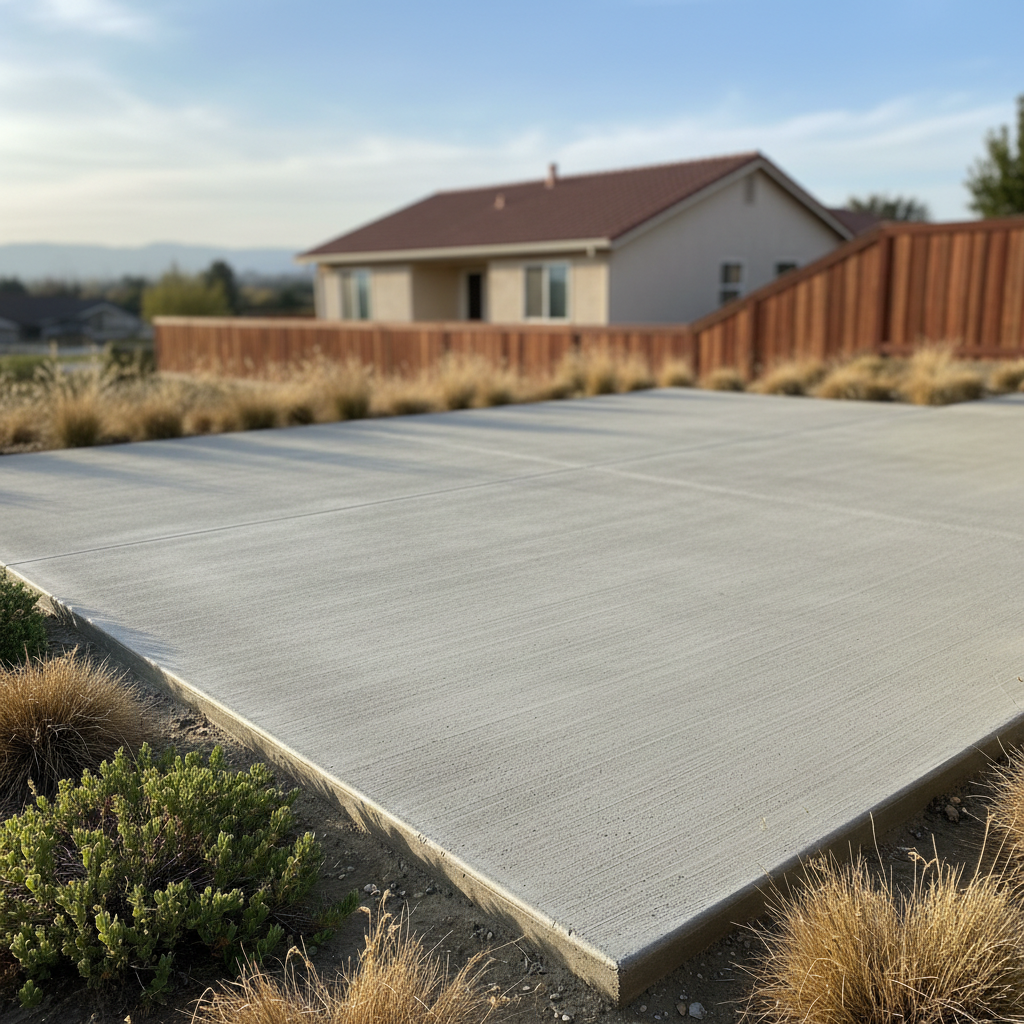
What's the real cost of a concrete patio in Tracy?
Alright, let's get straight to it. The cost of a concrete patio isn't a one-size-fits-all number, and honestly, anyone who gives you a quick quote without seeing the job is probably just guessing. For a basic, broom-finish concrete patio right here in Tracy, you're generally looking at somewhere between $8 to $15 per square foot. But that's just for the plain stuff, you know? If you want something a bit fancier – and a lot of folks do – like stamped concrete, colored concrete, or even exposed aggregate, that price jumps up. Stamped concrete, for example, can easily run you $15 to $25 per square foot, sometimes more. It all depends on how complex the pattern is and how many colors are involved. Demolishing an old patio, extensive site prep, tricky access to your backyard, or needing special drainage solutions can all add to the final bill. That's why I always tell people we really need to come out and take a look. We'll measure, chat about what you're hoping for, and then give you a solid number. No surprises.
How long does a concrete patio last around here?
A well-installed concrete patio, especially one poured by a crew that knows what they're doing – like us at Apex Concrete – should last you for decades. I'm talking 25 to 50 years, easy. The key, really, is proper installation. That means good sub-base preparation, the right concrete mix for our local conditions (we get some pretty hot summers and then those cold, damp winters, don't we?), proper rebar or mesh reinforcement, and correct expansion joints. If you skimp on any of those steps, you'll start seeing cracks and spalling a lot sooner. Regular sealing also plays a huge role in its longevity. Think of it as sunscreen for your patio – it protects against UV rays, moisture, and stains, which are all big enemies of concrete. Neglect the sealing, and you'll cut its lifespan significantly.
Can concrete patios crack? And what can I do about it?
Yes, concrete cracks. It's not a matter of if, but when and where. It's just a natural characteristic of concrete as it cures and expands/contracts with temperature changes. The goal isn't to prevent all cracks, but to control them. That's where control joints come in – those lines you see cut into concrete. They're designed to give the concrete a designated place to crack, usually along that line, making it much less noticeable. If you see a hairline crack that follows a control joint, that's usually nothing to worry about. If you see wide, uneven cracks, or cracks that lift one section higher than another, that could indicate a problem with the sub-base or an issue with the initial pour. For minor cracks, you can use a concrete crack filler. For bigger issues, you'd want to call a professional to assess it. Don't ignore them, especially if water can get in and freeze, making the problem worse.
What's the best way to clean and maintain my concrete patio?
Keeping your concrete patio looking good isn't rocket science, but it does take a little effort. For general cleaning, a good sweep to get rid of leaves and debris, followed by a rinse with a garden hose, usually does the trick. For tougher dirt, mildew, or algae (which can be a real pain in shady spots, especially after a rainy spell), you can use a pressure washer on a lower setting, or a stiff brush with a mild detergent. Just be careful with high-pressure washing on stamped or colored concrete, as it can sometimes damage the finish if you're not careful. The most important maintenance step, though, is sealing. I recommend resealing your patio every 2-5 years, depending on how much sun and traffic it gets. A good quality sealer will protect it from stains, moisture, and UV damage, keeping it looking fresh for longer.
Can I put a concrete patio over an existing one, or over dirt?
You can sometimes pour a new concrete patio over an existing one, but it's not always the best solution. The old patio needs to be in pretty good shape – no major heaving, sinking, or extensive cracking. If it's unstable, the problems will just transfer to your new patio. We'd typically need to clean it thoroughly, maybe etch it for better adhesion, and then pour at least 3-4 inches of new concrete on top. It's often better to remove the old patio, especially if it's got issues. As for pouring over dirt, absolutely. That's the most common way we do it. But it's not just