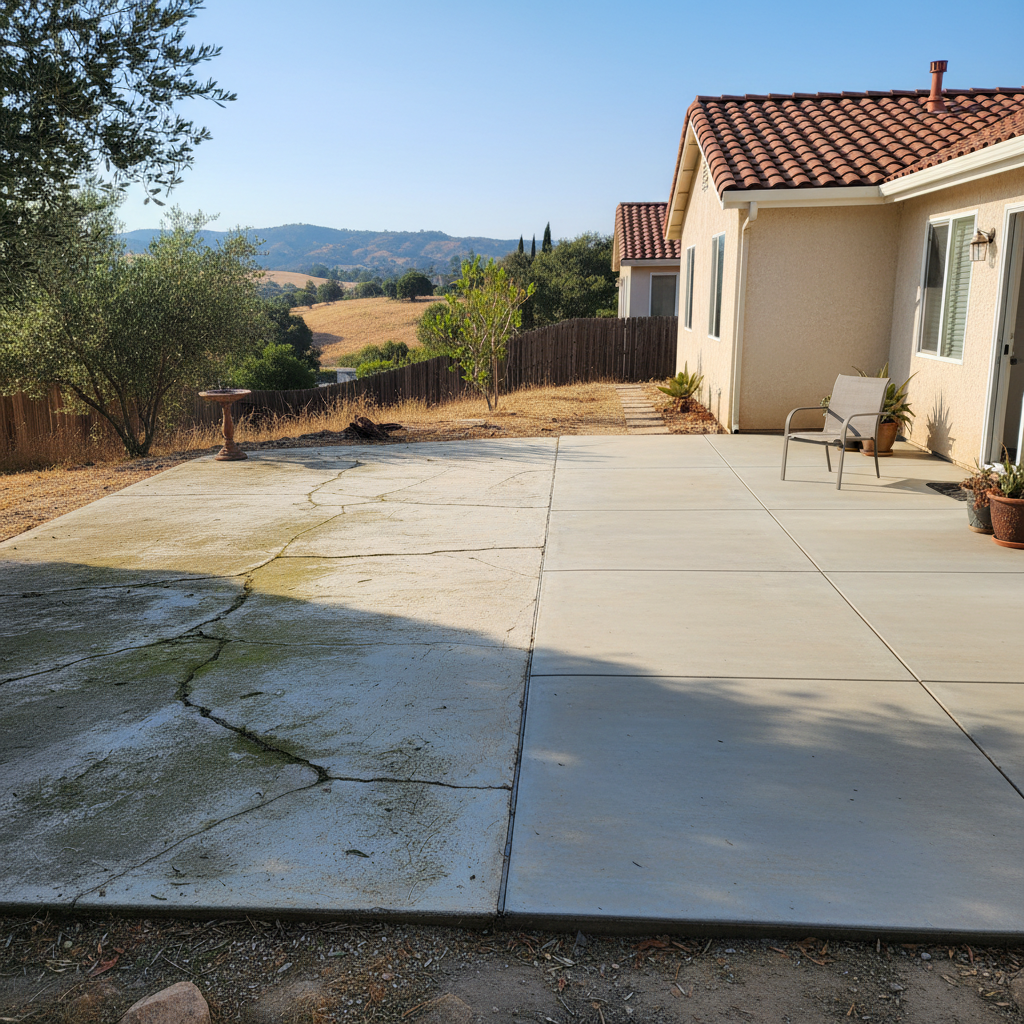
Alright, so you're thinking about sprucing up your backyard with a new patio. Good call, honestly. A solid patio really changes how you use your outdoor space, makes entertaining a breeze, and can definitely bump up your home's value. But then you hit the first big question, don't you? Should you go with a traditional poured concrete slab or those interlocking pavers everyone's raving about?
It's a pretty common head-scratcher for homeowners around Tracy, whether you're in an older spot like South Tracy or a newer development out by Mountain House. Both options have their good points and their not-so-good points, and what works for your neighbor might not be the best fit for you. Let's get down to brass tacks about each one.
Poured Concrete Patios: The Old Reliable
When most people picture a 'patio,' they're probably thinking of a poured concrete slab. And there's a good reason for that. It's been the standard for decades, and it's still a fantastic choice, especially when it's done right.
Cost
Generally speaking, poured concrete will be your more budget-friendly option right off the bat. You're mostly paying for the materials – cement, aggregate, water – and the crew to form it, pour it, and finish it. There's just less fiddly individual piece handling than with pavers, which usually means a lower initial price tag. If you're aiming for a solid, useful patio without totally emptying your wallet, poured concrete often wins on cost.
Durability & Maintenance
A concrete patio, if it's installed well, is tough. Like, really tough. It can handle heavy furniture, all the foot traffic you can throw at it, and even the occasional vehicle if it's thick enough and properly reinforced. Here in Tracy, with our hot summers and those heavy rains we sometimes get, concrete holds up just fine. The trick is proper installation: a good base and control joints to keep cracks from getting out of hand. Cracks can happen, sure, especially with our expansive clay soils that tend to shift a bit, but they're often just hairline and cosmetic. Maintenance? Pretty minimal. Sweep it off, hose it down, maybe power wash it once a year to keep it looking sharp. You might want to seal it every few years to protect against stains and weather; that's usually a simple weekend project.
Appearance
Now, when I say 'poured concrete,' some folks immediately picture a plain, gray slab. And, hey, that's an option. But modern concrete patios are anything but boring. You can get stamped concrete that looks just like stone, brick, or even wood. You can add color right into the mix, or stain it after it's cured. Seriously, the patterns and textures are endless. It gives you a seamless, custom look that can be truly stunning.
Interlocking Pavers: The Flexible Choice
Pavers have really taken off in popularity, and for good reason. They offer a different set of advantages that a lot of homeowners find appealing.
Cost
Pavers are typically more expensive than poured concrete, especially once you factor in the installation. The material cost per square foot is higher, and the labor involved in laying each individual paver, cutting them just right, and making sure they interlock properly takes more time and skill. So, if your budget is your absolute top priority, pavers might push you a bit higher.
Durability & Maintenance
Pavers are incredibly durable. Because they're individual units, they can flex and move with the ground underneath without cracking. This is a huge plus in areas with soil movement, which we definitely see around the Delta sometimes. If a paver gets damaged, you can usually just pop it out and replace it – a big win for repairs. We've done plenty of paver patios for folks in older parts of town where the ground has settled unevenly over the years, and they love this feature. Maintenance involves sweeping and occasional weeding between the joints. You'll also want to re-sand those joints every few years to keep everything locked in tight. Like concrete, sealing can help protect them and make their color pop.
Appearance
This is where pavers really shine for a lot of people, no doubt about it. They come in a massive variety of shapes, sizes, colors, and textures. You can create intricate patterns, borders, and designs that are just tough to replicate with poured concrete. They have a natural, segmented look that some homeowners prefer, and they can really add a lot of curb appeal and a high-end feel to your backyard.
So, Which One Should You Pick?
Look, there's no single 'best' option here. It honestly comes down to your priorities, your budget, and the specific look you're going for. Here's my take:
- Go with Poured Concrete if: You want a cost-effective, durable, low-maintenance patio with a seamless look. You're happy with the range of stamped and colored options, and you're aiming for a clean, modern feel.
- Choose Pavers if: You have a bit more budget and you prioritize design flexibility, easy repairability, and the ability to handle ground movement without visible cracking. You really love that segmented, natural look and the huge variety of styles.
For most folks in Tracy, either option will serve you well for years, as long as it's installed correctly. That's the real secret, isn't it? A cheap, poorly installed patio, whether it's concrete or pavers, is just going to give you headaches down the road. You want a crew that knows their stuff, understands proper base prep, drainage, and local soil conditions. That's where Apex Concrete comes in. We've poured and laid a lot of patios in this area, and we know what it takes to make them last.
Think about how you'll use the space, what aesthetic you like best, and what your long-term budget looks like. Then, give us a call. We can walk you through the options, show you some samples, and help you figure out the perfect patio for your Tracy home.