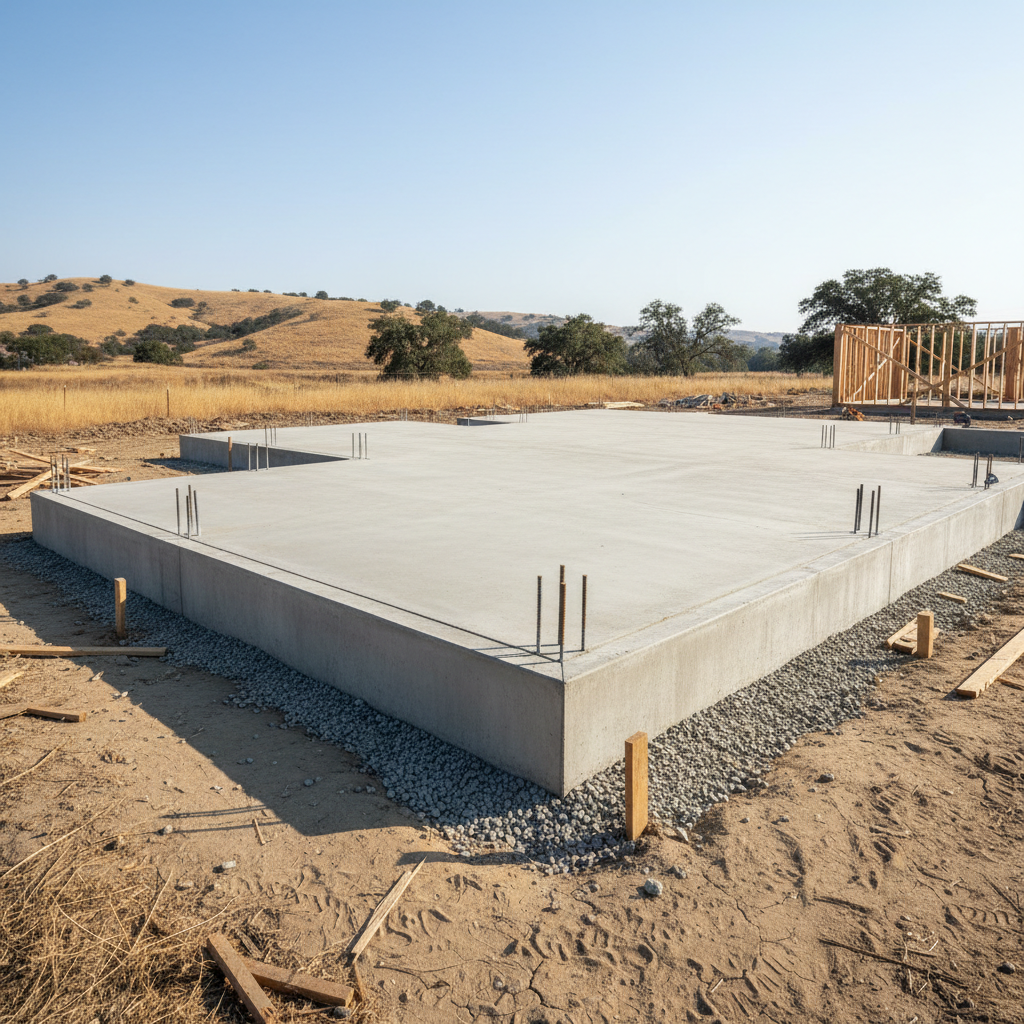
Building something new in Tracy – maybe a whole house, a big addition, or even a sturdy shed – means you'll need a good, solid foundation. And honestly, one of the first things on your mind is always, "What's this going to set me back?"
What Makes Foundation Prices Go Up (or Down)?
There's no single price for a concrete foundation, period. Anyone who tells you otherwise is probably trying to sell you something. Lots of things factor into the final cost. Here's what I look at when I'm putting together a quote for a client:
- Size and Complexity: This one's pretty obvious. A bigger footprint needs more concrete, more rebar, more labor. But it's not just about square footage. A simple rectangular slab costs way less than a complex design with multiple offsets, different heights, or those integrated stem walls for a crawl space. All those extra corners and elevation changes really add to the labor and material costs.
- Soil Conditions: This is a huge factor, especially around here in Tracy. Our soil can be tricky. We've got areas with expansive clays, particularly closer to the Delta, and those can swell and shrink when the moisture changes. If your site has bad soil, you might need extra digging, engineered fill, or even a deeper, more heavily reinforced foundation system, like a post-tensioned slab. That helps stop future cracking and settlement. It's not just about digging a hole; it's about making sure your building stays put for decades.
- Type of Foundation: Are we talking about a simple slab-on-grade, a raised foundation with a crawl space, or a full basement? Each type has its own cost. Slab-on-grade is usually the cheapest. A raised foundation means more concrete for stem walls, more labor, and often more complex plumbing and ventilation work. Basements? They're a whole different beast, needing extensive excavation, waterproofing, and special structural requirements.
- Reinforcement: Building codes set minimum reinforcement standards, but sometimes you need more. More rebar, post-tensioning cables, or thicker concrete for really heavy loads will definitely increase material and labor costs.
- Accessibility: Can my trucks and equipment get to your site easily? If we're hauling concrete down a narrow alley or up a steep slope, that takes more time. It might even mean smaller, more frequent deliveries, which costs more.
- Site Preparation: Clearing the land, grading it, and compacting the sub-base are all part of the job. If there's a lot of old debris to haul away, concrete to demolish, or significant grading needed, that'll show up in the price.
Typical Cost Ranges in Tracy, CA
Okay, let's talk some numbers. Remember, these are estimates for a standard residential job, and your specific project could fall outside these ranges. These figures cover just the concrete foundation work, not the whole house build.
- Basic Slab-on-Grade: For a simple slab – unheated, no plumbing – like for a detached garage or shed, you might be looking at $7 to $12 per square foot. That includes digging, vapor barrier, rebar, concrete, and finishing.
- Residential Slab-on-Grade (House/Addition): For a typical house foundation with plumbing cutouts, thicker edges, and standard reinforcement, you're usually in the $12 to $25 per square foot range. This covers all the basics: site prep, forming, vapor barrier, rebar, concrete, and finishing.
- Raised Foundation (Crawl Space): These are more involved, no doubt about it. You're looking at $25 to $45 per square foot, possibly even more. This includes footings, stem walls, and the concrete slab for the crawl space floor, plus all the necessary reinforcement and labor.
- Post-Tensioned Slab: If your soil report says you need it, a post-tensioned slab can run anywhere from $20 to $35 per square foot, depending on how complex it is and what the engineers require.
So, for a 1,500 square foot slab-on-grade house foundation, you could be looking at anywhere from $18,000 to $37,500. A 1,000 square foot addition with a raised foundation might be $25,000 to $45,000. These are just rough guides, but they give you a starting point.
What Your Quote Should Include
When you get a quote from Apex Concrete, or any reputable contractor for that matter, it should be detailed. You want to see:
- Scope of Work: Exactly what's being done – excavation, grading, formwork, rebar schedule, concrete PSI, finishing type.
- Materials: Itemized costs for concrete, rebar, vapor barrier, gravel, etc.
- Labor: The cost for the crew.
- Equipment: Any heavy machinery rentals.
- Permits: Who's responsible for pulling them.
- Timeline: Estimated start and completion dates.
- Payment Schedule: Clear milestones for payments.
Make sure it's also clear what's not included, like plumbing, electrical, or framing. You really don't want any surprises later.
How to Avoid Paying Too Much
Look, you don't want to get ripped off, but you also don't want to hire the cheapest guy who'll cut corners. Here's my advice:
- Get Multiple Bids: Three is usually a good number. Don't just compare the bottom line; compare what's actually included in each bid.
- Check References and Licenses: Always, always, always do this. Make sure they're properly licensed and insured in California. Ask for contacts from past clients.
- Understand the Details: Don't be afraid to ask questions. If something isn't clear in the quote, get clarification. A good contractor will take the time to explain things to you.
- Don't Rush: A foundation is literally the base of your whole project. Take your time choosing the right contractor. Rushing often leads to mistakes and extra costs down the line.
- Beware of Lowball Offers: If one bid is significantly lower than the others, there's usually a reason. They might be cutting corners on materials, not carrying proper insurance, or plan to hit you with change orders later.
A solid foundation isn't an area to skimp on. It's literally holding up your entire investment. Doing it right the first time will save you a ton of headaches and money in the long run.